Tsunami of hunger

07/23/08

Esther Vivas

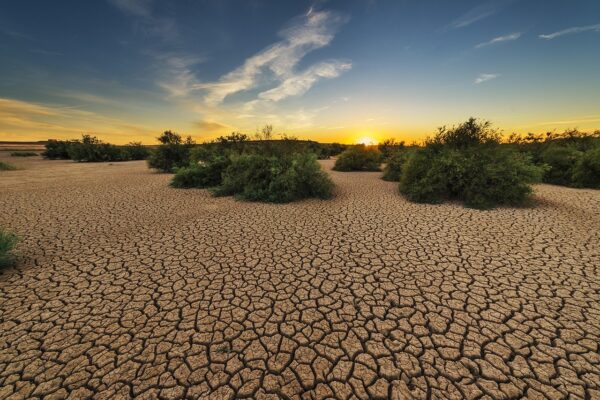
During the last months, the impossibility to access food has thrown thousands of people in Southern countries, out of their home. Demonstrations, strikes and protests have repeatedly taken place from one end of the planet to the other. During the past year, rice has doubled in price in Bangladesh and food cost increased by 40% in Haiti and Egypt. The same situation has occurred in Côte d’Ivoire, Bolivia, Indonesia, Mexico, Philippines, Pakistan, Mozambique, Peru, Yemen, Ethiopia… And this list could go on.
(more…)

Solar Thermal Power Coming to a Boil

07/23/08

Analysis by Jonathan G. Dorn*

WASHINGTON, Jul 23 (IPS) - After emerging in 2006 from 15 years of hibernation, the solar thermal power industry experienced a surge in 2007, with 100 megawatts of new capacity coming online worldwide.

During the 1990s, cheap fossil fuels, combined with a loss of state and federal incentives in the U.S., put a damper on solar thermal power development. However, recent increases in energy prices, escalating concerns about global climate change, and fresh economic incentives are renewing interest in this technology.
(more…)

“Humans Are Now the Primary Drivers of Our Climate”

07/22/08

Interview with climate expert Sir David King

BARCELONA, Spain, Jul 22 (IPS) - Humanity faces enormous challenges at the start of the 21st century, says Sir David King, Britain’s former chief scientific advisor and now director of the Smith School of Enterprise and the Environment at Oxford University in England.
(more…)

NERVOUS INVESTORS SEARCHING FOR NEW ASSET CLASSES

07/22/08

By Hazel Henderson

President, Ethical Markets Media, USA

We all know the story of the tulip mania, a favorite but short-lived asset of Europeans in the 1700s. Gold has always been a favorite safe haven in spite of its volatility and recent efforts of central banks to devalue the yellow metal by leasing it and selling off their reserves. We have lived through bubbles in art, antiques, jewelry, junk bonds, dot.coms and housing, as investors continually search for safety and diversification.
(more…)

Ecstasy tabs destroying forest wilderness

07/21/08

IRIN - humanitarian news and analysis

PHNOM PENH, 20 July 2008 (IRIN) - The production of sassafras oil, which is used to make the recreational drug ecstasy, in southwest Cambodia, is destroying trees, the livelihoods of local inhabitants and wreaking untold ecological damage, according to David Bradfield, adviser to the Wildlife Sanctuaries Project of Fauna and Flora International (FFI).
(more…)

UN Invited to Create Interfaith Council

07/21/08

By Tito Drago

MADRID, Jul 21 (IPS) - The participants at the World Conference on Dialogue in Madrid have proposed that the United Nations create an interreligious council.

The Jul. 16-18 conference, which was attended by 250 people representing Islam, Judaism, Christianity, Buddhism, Hinduism and other faiths, was opened on Jul. 16 by King Abdullah of Saudi Arabia and King Juan Carlos of Spain.
(more…)

Warming Is Major Threat To Humans, EPA Warns

07/18/08

By David A. Fahrenthold and Juliet Eilperin
Washington Post Staff Writers

Friday, July 18, 2008. Climate change will pose “substantial” threats to human health in the coming decades, the Environmental Protection Agency said yesterday – issuing its warnings about heat waves, hurricanes and pathogens just days after the agency declined to regulate the pollutants blamed for warming.
(more…)

Seismic Shift or Non-Decision by Bush on Iran?

07/18/08

Analysis by Gareth Porter*

WASHINGTON, Jul 18 (IPS) - The U.S. decision to send the State Department’s third-ranking official to sit in on the meeting between European Union foreign affairs chief Javier Solana and Iran’s nuclear negotiator Saeed Jalili Saturday has been hailed as a major diplomatic breakthrough, but it is too soon to pop the champagne cork.
(more…)

US: Realists Rack Up Another Win

07/17/08

Analysis by Jim Lobe*

WASHINGTON, Jul 16 (IPS) - In the seemingly never-ending internal battle between hawks and realists in the administration of U.S. President George W. Bush for control of foreign policy, the realists appear to have chalked up another win over their once-dominant foes.
(more…)

Chinese NGOs struggle to grow

07/17/08

By Carol Huang

The Christian Science Monitor
From the July 16, 2008 edition

Many of the unofficial groups lack know-how for training volunteers and keeping track of how donor money is pent.

Beijing - Two months after China’s devastating earthquake, where do Chinese unofficial nongovernmental organizations stand?

Two months after such volunteer groups won widespread praise for delivering urgent quake relief, the government has not adjusted its restrictive policies toward them, as people in the field had hoped.
(more…)

‘Belgium Is the World’s Most Successful Failed State’

07/16/08

SPIEGEL ONLINE

Chaos has returned to Belgium’s capital: The government has collapsed, the prime minister has offered his resignation. German newspapers on Wednesday wonder if the linguistically divided country will ever get its act together.
(more…)

07/16/08

07/16/08

‘Belgium Is the World’s Most Successful Failed State’
SPIEGEL ONLINE
Chaos has returned to Belgium’s capital: The government has collapsed, the prime minister has offered his resignation. German newspapers on Wednesday wonder if the linguistically divided country will ever get its act together.

The Belgian Prime Minister Yves Leterme threw in the towel late on Monday night, saying he could not force through a consensus between the Flemish and French-speaking coalition partners.

Leterme offered his resignation to King Albert II, who has so far not formally accepted it. The king is now holding consultations with lawmakers expected to last several days.

In his statement, Leterme, head of the Flemish-speaking Christian Democrats, said the “federal consensus model has reached its limits” – raising the specter of Belgium breaking up for good. The prime minister had a self-imposed July 15 deadline to come up with an agreement on constitutional reform.

The nation’s two main regions – Dutch-speaking Flanders in the north, and Francophone Wallonia in the south – have enjoyed increased regional autonomy since the 1970s. The prosperous north now wants more autonomy. It has pushed for reforms that would shift responsibility for taxation and some social security down to the regional level. Francophone parties accuse their Flemish counterparts of trying to separate the north from the poorer south, where unemployment is three times as high.

Matters have been further complicated by a dispute over an electoral district that comprises largely Francophone Brussels and 20 Flemish-speaking towns near the capital.

German papers on Wednesday are concerned about the political crisis at the heart of Europe, but most hold out hope that the Belgians will save their government.

The center-left Süddeutsche Zeitung writes:

“There is a great sense of perplexity. No one knows how Belgium should go forward. New elections won’t bring any new power relations and so won’t bring any solution. Before one starts to criticize small Belgium for its political incompetence one should reflect on the fact that if the Flemish want more regional autonomy and the Walloons are fearfully fighting against that, as in all political conflicts, it is a question of the deep desire for self-determination, identity and belonging. Belgium’s search for a new internal balance is not simply about the country’s folklore. It concerns all of Europe.”

The center-right Frankfurter Allgemeine Zeitung writes:

“The vast majority of the six million Flemish and four million Walloons have nothing against living in the same state, even if it is often a parallel existence. What has pushed the country to the edge of a crisis of state are the provincial-minded politicians and the parties which have become mere lobby groups. Stubborn insistence on proportionality and the splitting of the party system along both political and linguistic lines have caused the art of compromise to slowly shrivel away. That is why there is no easy way out of the crisis. The voters should now speak.”

The left-leaning Die Tageszeitung writes:

“In terms of economics, Belgium is the most successful ‘failed state’ of all time. Its per capita income is way ahead of Germany, the world’s leading exporter …”

“Belgium can continue to flourish without a national government for the simple reason that the cabinet doesn’t have to decide much anyway. Most authority has devolved to the regions … The central government is left to deal with foreign policy, defense and finance policy – all issues that are increasingly taken care of at the EU level.”

“The Belgian government still controls spending on social welfare. And this is where the conflict has blown up between the two language groups, because rich Flanders wants to pay less for poorer Wallonia.”

“There is still no solution in sight. But part of the Belgian paradox is that there will be some sort of compromise at some stage. Belgium is not lost yet.”

The left-leaning Berliner Zeitung writes:

“In Belgium the word ’separation’ is rearing its ugly head again. But things are still not quite that bad. Belgians are masters of muddling through and reaching compromises. Once again King Albert II is playing a key role: He can reject Leterme’s resignation and force the coalition partners to work together for a transitional period. He could also ask someone else to form a government.”

“Snap elections are unlikely: that would require a compromise in the dispute over the bilingual electoral district in Brussels. This is the issue that forced the break-up of the government. It is possible that voters will be asked to elect a new parliament when they go to the polls for European and regional elections next June. Now it’s a question of playing for time. No one in Belgium believes in big solutions that will ease the conflict between the linguistic groups in the long term.”

The conservative Die Welt writes:

“Belgium had always prided itself on being a model for Europe: exemplifying, through the art of compromise and the virtue of tolerance, how nations and cultures can exist peacefully side by side. The country can no longer claim this. The latest political crisis sees the kingdom moving towards the limits of being governable. It is difficult to understand how a people can get so caught up in trifles that they allow the very existence of the country come under threat. On the surface the conflict seems to hinge on a small electoral district in Brussels that was supposed to be split up, ending its bilingual status. “

“In reality, however, the Belgians are arguing about much more. The question is how much solidarity people are prepared to show when times are tough. The rich north no longer wants to help out the south, which has been buffeted by globalization. In the end it’s all about money.”

Being a Refugee Becomes a Dream

07/16/08

By Aldo Ciummo*

ROME, Jul 16 (IPS) - Ernestine Kayindo fled Goma town in the northeast of the Democratic Republic of Congo in 1997 amidst fighting between the regular army and rebels of the National Congress for the Defence of the People (NCDP), a Tutsi armed group that is still active.

“All of us Congolese felt in danger of being killed,” says Kayindo, who now works in Rome with the Società Civile Congolese.
(more…)

Talking With Jane Mayer

07/15/08

by Eric Umansky

- July 15, 2008 Tags: al-Qaida, CIA, David Addington, Department of Justice, Detainee Treatment Scandal, Dick Cheney, FBI, George W. Bush, Jane Mayer

As much as any other reporter, The New Yorker’s Jane Mayer has helped expose the post-9/11 system of detention, rendition and abuse of ‘enemy combatants.’ Her book out today, “The Dark Side,” significantly expands on her reporting. We talked to Mayer about how the move to the system started with bureaucratic bungling and the curiously passive role of President Bush, who kept “disappearing from the frame.”

Editor’s Note: Umansky’s reporting is briefly cited in the book.
(more…)

Ten Years On, Some Step Towards Justice

07/15/08

By Irene de Vette

ROTTERDAM, Jul 15 (IPS) - Human rights organisations all over the world will celebrate the tenth anniversary Jul. 17 of the adoption of the Rome Statute establishing the International Criminal Court (ICC). The ICC is the first and only permanent international criminal tribunal to prosecute individuals accused of genocide, war crimes and crimes against humanity.
(more…)

Democracy is losing ground in Africa

07/14/08

By Edmund Sanders
Los Angeles Times Staff Writer

After a surge of reform in the 1990s, many countries have suffered setbacks, with ‘pseudo-democracies’ and incumbents who refuse to cede power.

July 13, 2008. NAIROBI, KENYA — Election-related meltdowns in Zimbabwe and Kenya are stark reminders of democracy’s fragile foothold in Africa, experts say, despite years of financial and diplomatic investment by the United States and other Western nations.
(more…)

EU Still Targeting Poorest States for Inclusion in EPAs

07/14/08

By Teresa Robins

SEVILLE, Spain, Jul 14 (IPS) - The European Commission is still targeting those least developed countries that have resisted economic partnership agreements (EPAs) by opting for the Everything But Arms trade preference scheme.
(more…)

Italian Minister proposes prints for all

07/11/08

ANSA

UNICEF distances itself from govt in gypsy fingerprint row

(ANSA) - Rome, July 11 - Defence Minister Ignazio La Russa on Friday suggested that the government should take everyone’s fingerprints following a European Parliament (EP) vote that accused Italy of discrimination against gypsies.
(more…)

China Poised to Surpass U.S. Economy by 2035

07/11/08

By Jim Lobe

WASHINGTON, Jul 11 (IPS) - China’s booming economy is on course not only to surpass that of the United States by 2035, and but to double its size by 2050, according to a new study released here this week by an influential former World Bank economist who also headed the China desk at the U.S. Treasury.
(more…)

    This web site is dedicated to the collection and redistribution of professional news and analysis that the commercial media routinely ignore.
    It aims to provide global analysis of trends and processes, in a media world that is increasingly centred on events.
    This is an additional window on the process of globalisation, and it is a personal initiative, without any funding or vested agenda, beyond providing friends with a personal contribution.
    Reproduction in whole or in part without permission is prohibited, articles are posted for information purposes.

Roberto Savio